How to choose a camping cook set: pots, materials, what you need

Choose a camping cook set by three things: how many people you feed, how you carry it and what you cook. For most campers that means one pot with a lid sized to the group, a frying pan if you cook fresh food, and a material that matches the trip: aluminum for low weight and even heat, stainless steel for rough handling, titanium when every ounce counts and you mostly boil water.
What do you actually need in a camp cook set?
Less than most sets contain. REI's guide to camping cookware describes cooksets as pots, pans and lids designed to nest together, and says the number of pots depends on the cooking you plan and the size of the party. If you only rehydrate food for two people, one pot is sufficient. More elaborate meals and larger groups need more pots and pans.
GearLab's cookware buying advice gives two packing lists that show the range. For ultralight backpacking: one small pot, a spork for every person and meals that only need boiling water. For car camping: a main pot with a lid, a second pot or large bowl, a frying pan, a cutting board, a knife, and a plate, cup, spoon and fork for each person.
A workable middle for a weekend with real food:
- A pot with a lid for pasta, rice, soup and stew.
- A frying pan for eggs, fish and pancakes.
- Something to boil water in for coffee, tea and washing up.
- One eating tool per person and one sharp knife for the cook.
Aluminum, stainless steel or titanium: which material is best?
None is best at everything. The table combines what REI and GearLab say about each metal. The last column is our summary.
| Material | Good at | Weak at | Suits |
|---|---|---|---|
| Aluminum | Light, affordable, conducts heat well, simmers without scorching | Dents and scratches easily; reacts with acidic foods | Cooking real meals on a budget, on foot or by car |
| Hard-anodized aluminum | Resists scratches and abrasion, long-lasting | Costs more than plain aluminum | All-around camp cooking |
| Stainless steel | Tougher and more scratch-resistant than aluminum | Heavier; uneven heat can cause hot spots that scorch food | Rough use, groups, car camping |
| Titanium | Lightest option without giving up strength; heats quickly | Most expensive; hot spots; must not be overheated | Fast and light trips that mostly boil water |
Cast iron is tough and good for baking, but REI calls it very heavy and says it needs specific care. A nonstick coating makes cleanup easy, but it is less durable than bare metal and most coatings can be scratched by metal utensils. REI also warns that cookware coated with PTFE can give off toxic fumes if it is severely overheated.
Our reading of the two sources: if you simmer and fry, the even heat of aluminum matters more than the last few ounces. If you only boil water, any of the three metals will do, and weight and price decide.
Is aluminum cookware safe?
REI's answer is that, based on reports from the National Institutes of Health, the Food and Drug Administration and the Alzheimer's Society, no health risks are associated with using aluminum pots, pans or skillets. That is REI's summary of them, not our own reading. The US Agency for Toxic Substances and Disease Registry says in its public summary on aluminum, last reviewed in 2015, that very little enters your body from aluminum cooking utensils. It adds that some people with kidney disease store a lot of aluminum in their bodies: ask your doctor if that is you.
GearLab notes that raw aluminum can react with acid and alkaline foods and change their flavor, and REI advises against cooking leafy greens or cauliflower in aluminum because it can affect taste and appearance.
What size pot do you need for your group?
REI's rule of thumb is that the largest pot in the set should hold about 1 pint (roughly 0.5 L) per person. GearLab suggests a main pot of about 2 to 3 quarts (2 to 3 L) for every one to four people when car camping, and a pot of about 1 quart (1 L) for one to four people on an ultralight trip where everyone eats just-add-water meals.
The gap between those figures is the menu. Buy for the meal you cook most often.
What makes a cook set easy to pack and use?
- Nesting. Pieces that sit inside each other take the space of one pot.
- Lids. REI points out that lids reduce cooking time, save fuel and reduce splatter.
- Handles. Folding handles pack flat. With handle-free pots, REI's reminder applies: make sure you have a way to pick up hot pots safely, and pack it.
The Restwild Compact Aluminum Camping Cook Set is an example of the middle route: a pot with a lid, a frying pan and a kettle in aluminum, for 2 to 4 people. The pieces nest inside each other and the handles fold. It works on backpacking stoves, alcohol stoves and camp stoves. A stove and fuel are not included.
What should you eat with?
GearLab's lists come down to one spork per person for backpacking, or a spoon and fork each for car camping. REI adds a reminder: keep a can opener in the kitchen box, or the canned chili stays shut.
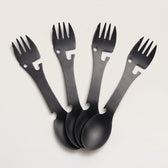
The Restwild 5-in-1 Camping Spork covers both points. It is a flat, one-piece utensil with a spoon at one end and a fork at the other, plus a serrated knife edge, a can opener and a bottle opener. Each one is 7.1 in (18 cm) long and weighs about 1.6 oz (45 g), they come in a pack of four, and a hole by the fork takes a carabiner or cord (not included). Our view: the serrated edge is for food on your plate, and the cook still wants a real knife for prep.
How do you cook safely at camp?
Cook outside, every time. The US Consumer Product Safety Commission says never to use portable fuel-burning camping equipment inside a home, garage, vehicle or tent unless it is specifically designed for use in an enclosed space and comes with instructions for safe use there. It also says never to burn charcoal in any of those places. Our reading: no stove in a tent, a vestibule or a vehicle unless its maker's instructions expressly allow enclosed use. Carbon monoxide has no smell or color, and the commission describes the first symptoms as flu-like without the fever: headache, fatigue, shortness of breath, nausea and dizziness. If you feel them, get to fresh air at once and get medical help.
The US Forest Service's safety page for Six Rivers National Forest adds the fire side. Its stove points are written for propane stoves:
- Keep open fires and fuel-burning appliances far enough from the tent to prevent ignition from sparks, flames and heat.
- Never use a flame or any other heating device inside a tent.
- Read the instructions that come with the stove and the propane cylinder.
- Use the stove for cooking only, and never leave it unattended while it burns.
Our own additions: set the stove on level, bare ground, a flat rock or a sturdy picnic table, never on fabric, plastic or dry grass. Check that the pot sits steady before you let go, turn handles away from where people walk, and treat every handle and lid as hot. Connect or change fuel only when the stove is off and cool, away from any other flame. Check fire restrictions before the trip: in dry conditions they can limit stoves as well as campfires. The National Park Service's page on cooking in camp also suggests practicing with a new stove before the trip, in case it is hard to start or has a broken part. Camp layout and kitchen distances are covered in how to set up a comfortable camp.
How do you wash and store a cook set at camp?
At a developed campsite, the National Park Service describes a three-bin method: wash in warm water in the first bin, rinse in warm water in the second, then rinse again in a third bin with 2 teaspoons of bleach per gallon of water, and let everything air dry.
In the backcountry, follow Leave No Trace's guidance on wastewater. Carry the water to a wash site at least 200 feet (about 60 m) from streams and lakes, use hot water and effort first and only a small amount of biodegradable soap, strain the dishwater, scatter it broadly well away from camp, and pack out what the strainer catches.
For the Restwild cook set, the care instructions are short: wash it by hand and use wooden or plastic utensils.
What changes in bear country?
Cookware counts as food. The National Park Service's food storage advice says bears treat anything with a scent as food, and its list includes fuel and items used for preparing or eating meals. Wash dirty dishes immediately, never store food in your tent or backpack, and follow the storage rules of the park you are in, which differ from place to place.
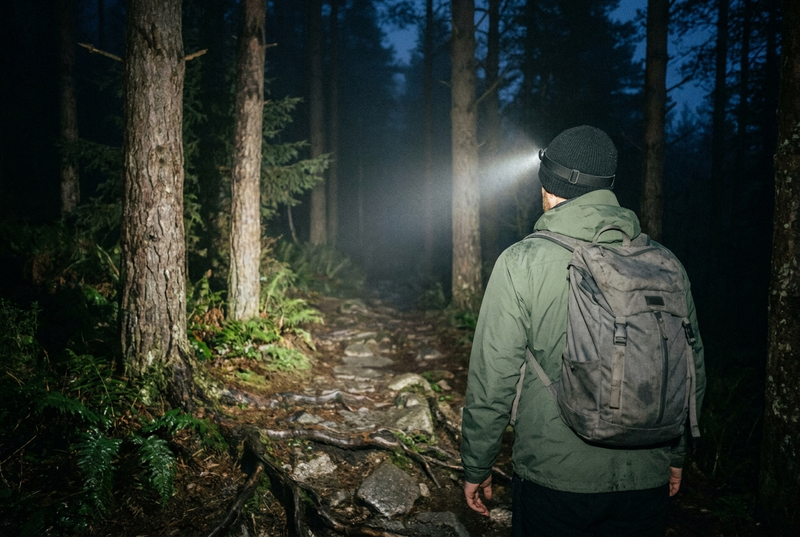
After dark, our guide to how many lumens you need in a headlamp covers the light for camp chores.
Gear mentioned: the Compact Aluminum Camping Cook Set and the 5-in-1 Camping Spork, 4-Pack. See all Restwild gear.
Frequently asked questions
Is aluminum camping cookware safe to cook in?
REI says that, based on reports from the National Institutes of Health, the Food and Drug Administration and the Alzheimer's Society, no health risks are associated with aluminum pots and pans. The US Agency for Toxic Substances and Disease Registry, in a summary last reviewed in 2015, says very little aluminum enters your body from cooking utensils. Acidic foods can pick up an off taste from raw aluminum.
What size pot do I need for two people?
REI's rule of thumb is about 1 pint (roughly 0.5 L) per person for the largest pot, so about a quart for two. GearLab suggests about 2 to 3 quarts (2 to 3 L) for car camping groups of one to four.
Can you cook inside a tent when it rains?
No. The US Consumer Product Safety Commission says never to use portable fuel-burning camping equipment inside a tent unless it is specifically designed for enclosed spaces and has instructions for that use, and a US Forest Service safety page says never to use a flame inside a tent. Our advice: cook in the open air, never in the vestibule, and if you rig a tarp against rain, keep its sides open and the fabric well clear of the flame.
How do you wash dishes at a campsite without harming the water?
Carry the water at least 200 feet (about 60 m) from any stream or lake, use as little biodegradable soap as you can, strain the dishwater and scatter it widely, and pack out the food scraps. That is the Leave No Trace method for the backcountry. In a developed campground, ask the host where dishwater should go.