How to set up a comfortable camp: table, chair, kitchen layout

A comfortable camp has three separate areas on ground that is already bare and level: a place to sleep, a place to cook and eat, and a place to sit. Keep flame away from fabric, keep food away from the tent, and put the table and chairs where smoke and foot traffic are not.
How should you lay out a campsite?
Start by walking it. The National Park Service's advice on setting up a campsite is to walk the boundaries first and pick the best spots for the tent, the cooking station and the eating station, then keep a safe distance between the three. It notes that a developed site usually comes with a parking space, a fire ring or grill and a picnic table, so the real decisions are where the tent and the cooking station go. It also says to make camp before dark.
That is also the low-impact choice. Leave No Trace's second principle lists established campsites, rock, gravel, dry grasses and snow as durable surfaces, and says good campsites are found, not made. Its warning for developed sites is about site creep: a campsite grows each time someone tramples its edge, so keep tents and kitchen gear on ground that is already worn.
Where should the tent go?
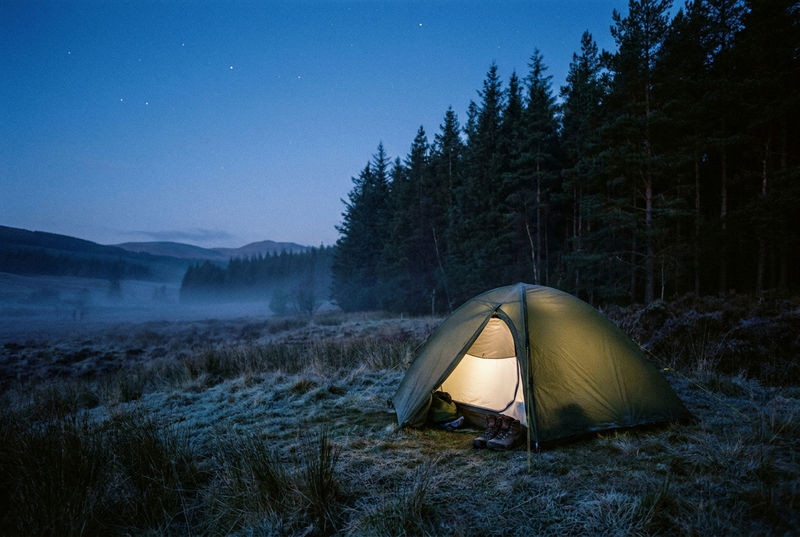
The National Park Service describes the ideal spot as level ground, but not a low place, at a safe distance from the fire ring and the cooking area. Its reasons are practical:
- Low and sunken ground can become extremely wet when it rains.
- Sparks from a fire can melt holes in a tent or set it alight.
- Stakes and guy lines become tripping hazards next to a busy path.
- Sticks, rocks and pinecones are uncomfortable and can puncture the floor, so clear them first.
Then look up. The same page says that if you see dead branches overhead, you should not camp under them. The US Forest Service's page on hazard trees says to avoid parking or camping where trees could fall and to be particularly watchful when it is windy or after a snowstorm. Signs it lists include trees without needles, bark or limbs, broken tops and an abundance of woodpecker holes.
Water is the last check. Leave No Trace asks you to camp at least 200 feet (about 60 m) from lakes and streams, which it counts as 70 to 80 adult steps, so wildlife keeps its route to the water. Cold air also settles on low ground, as how to sleep warm in a tent explains.
How far should the kitchen and the fire be from the tent?
The agencies give different numbers for different risks. Where two pages disagree, we list both.
| What | Distance | When it applies | Source |
|---|---|---|---|
| Campfire to tents, vegetation and low branches | At least 15 ft (4.5 m) | Any campfire | Smokey Bear |
| Stove or fire to tent | Far enough to prevent ignition (no figure given) | Always | US Forest Service, Six Rivers National Forest |
| Cooking space and stored food to sleeping space | 200 ft (60 m) | Bear country, when you pick your own site | National Park Service, campsite page |
| Cook spot to tent, and to water | 100 yards (90 m) | Backcountry with no designated cook spot | National Park Service, cooking page |
| Stored food to tent | 100 yards (90 m) | Bear country, backcountry | National Park Service, cooking page |
| Bear canister to campsite | 100 ft (30 m) or more | Backpacking with a bear canister | National Park Service, food storage page |
| Tent to lakes and streams | At least 200 ft (60 m) | Where you choose the spot; local rules come first | Leave No Trace |
The National Park Service figures for bear country come from three of its own pages. The campsite page says 200 feet, and its page on cooking in camp says 100 yards. Both are written for backcountry camping, where you choose the spot. Its food storage page puts a bear canister 100 feet or more from the campsite. Our advice is to use the larger figure where the ground allows, and to follow the rule of the park or forest you are in, which overrides all three. In a developed campground you cannot move the picnic table that far from the tent pad, and the campground's food storage rules do the work instead.
For fires, the campfire safety guide of the Smokey Bear wildfire prevention campaign adds more than the 15 feet:
- Check for fire restrictions before you go, and do not build a fire in hazardous, dry or windy conditions.
- Use an existing fire pit with a metal ring or rock circle if there is one.
- Clear a circle at least 10 feet (3 m) across around the pit.
- Keep vertical clearance of at least three times the height of the flames.
- Have water, a bucket and a shovel on hand.
- Before you leave or sleep, drown the fire with water, stir, drown again and feel that it is cool: too hot to touch is too hot to leave.
How do you set up the camp kitchen?
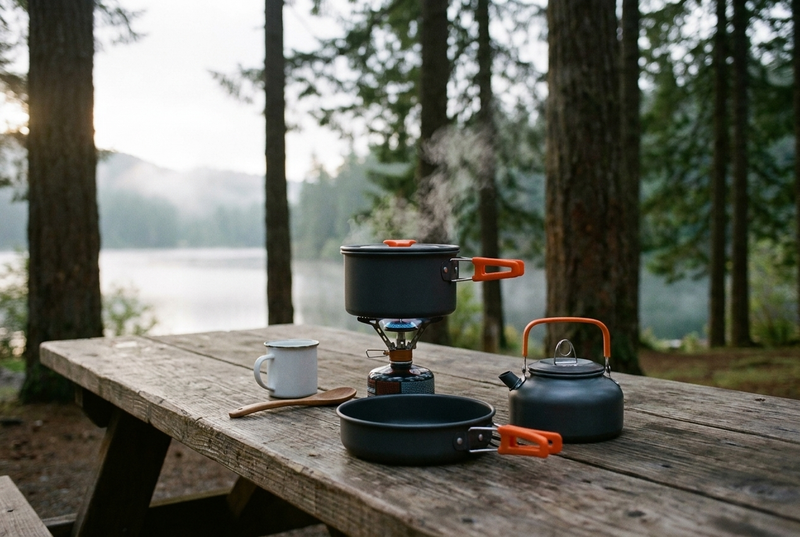
In a developed campground, the National Park Service says cooking takes place at the picnic table and the fire ring or grate, and suggests arranging the area so you have room to work. Our suggestion: stove at one end, prep space in the middle, wash-up at the other.
The US Forest Service's safety page for Six Rivers National Forest says to keep fires and fuel-burning appliances far enough from the tent to prevent ignition from sparks, flames and heat, never to use a flame or other heating device inside a tent, and never to leave a stove unattended while it burns. The US Consumer Product Safety Commission gives the carbon monoxide reason: never use portable fuel-burning camping equipment inside a home, garage, vehicle or tent unless it is specifically designed for an enclosed space and has instructions for safe use there. By our reading, a tent vestibule counts as inside.
Our advice is to put the stove on something solid and level: the picnic table, a flat rock or bare ground. A light fabric-top table is not that surface. Pots, materials and washing up are covered in how to choose a camping cook set.
Where do the table and chairs go?
Give the sitting area the best spot left once the tent and kitchen are safe: level, out of the smoke and off the path between the two. Fabric seats and tabletops are no friendlier to sparks than a tent is. Our advice: sit as near the fire as is comfortable while someone is watching it, pull chairs and table well back when the wind picks up, and put the fire out before you leave it.
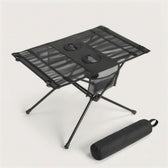
A small table adds a clean, level place off the ground for the things you reach for all evening. The Restwild Folding Camping Table does that job: it has a fabric top with two built-in cup holders and mesh side storage on a 7075 aluminum frame, weighs 1.5 lb (680 g) and packs to 15.7 x 3.5 in (40 x 9 cm) in its carry bag. It sets up in under a minute without tools. Because the top is fabric, we would keep a lit stove and pots straight off the flame on the picnic table or the ground.
The Restwild Lightweight Folding Camping Chair has a hammock-style seat in ripstop nylon, weighs 3.7 lb (1.7 kg) and holds up to 330 lb (150 kg). A carry bag is included. Together the chair and table come to 5.2 lb (about 2.4 kg), by our own addition.
How do you keep gear off wet ground?
Choose the ground first: low and sunken areas can turn wet for the whole camp, not only the tent. Then get things up.
- Use the table and its side storage for small items that vanish in grass: headlamp, phone, lighter, cutlery.
- Hang wet towels and clothes on a line, not over a tent.
- Put a groundsheet or a mat under anything that must sit on damp ground.
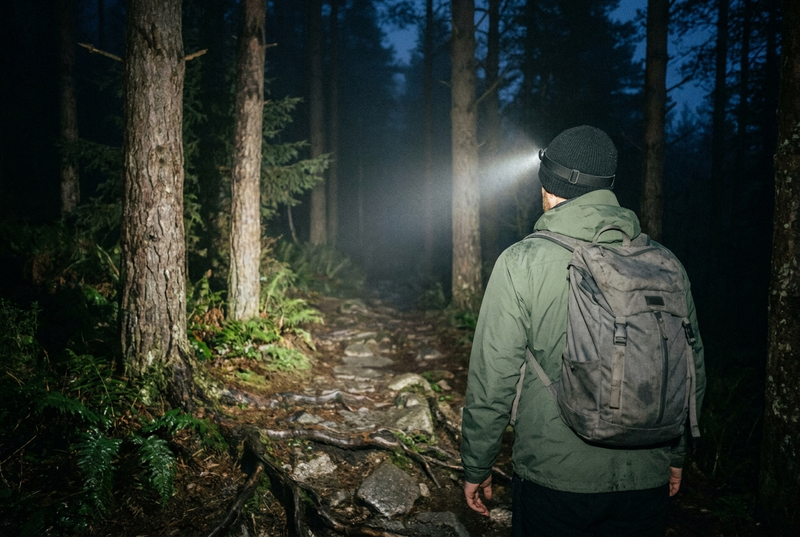
After dark, see how many lumens you need in a headlamp for camp light levels.
What changes in bear country?
Everything with a scent moves out of the sleeping area. The National Park Service's food storage page says bears treat anything with a scent as food, and its list includes drinks, soaps, toiletries, trash, ice chests, sunscreen, bug repellent, fuel and items used for preparing or eating meals. Its rules for campgrounds and picnic areas:
- Secure food, garbage and other scented items as soon as you arrive.
- Keep food within arm's reach and do not turn your back on it.
- Do not store food in your tent or backpack.
- Wash dirty dishes immediately.
Cars are not a general answer. The page says that in some parks food may be stored inside a car as long as it is out of sight, with the windows completely closed, and only during daylight hours, and never in a pickup bed or strapped to the outside of a vehicle. In other parks all food must come out of the car and go into lockers. The campsite page adds one more rule: do not sleep in the clothes you cooked in.
So the cup-holder table gets cleared at night. Drinks, snacks and the sunscreen in the mesh pocket go wherever the food goes.
Gear mentioned: the Folding Camping Table with Cup Holders and the Lightweight Folding Camping Chair. See all camp furniture.
Frequently asked questions
How far should a tent be from a campfire?
Smokey Bear's campfire guide says to keep a fire at least 15 feet (4.5 m) from tents, vegetation and low-hanging branches. The National Park Service gives no figure but says to pitch at a safe distance from the fire ring, because sparks can melt holes in a tent or ignite it.
How far should you cook from your tent in bear country?
The National Park Service gives two figures on two pages, both for backcountry camping: 200 feet (about 60 m) between a cooking space and a sleeping space, and 100 yards (about 90 m) from the tent for a cook spot and for stored food. A third page puts a bear canister 100 feet (30 m) or more from the campsite. Use the larger figure where you can, and follow the rules of the park or forest you are in.
Can you put a camp stove on a folding camp table?
Only on a table whose maker says it is made for a stove. A light fabric-top table, including ours, is for plates, cups and small items. Put the stove on a picnic table, a flat rock or bare ground, away from the tent.
Where is the best place to pitch a tent on a campsite?
On level ground that is not a low spot, on a surface that is already bare, away from dead trees and overhead branches, at a safe distance from the fire ring and cooking area, and at least 200 feet (about 60 m) from lakes and streams. That combines National Park Service and Leave No Trace advice.