How to sleep warm in a tent: the whole sleep system

To sleep warm in a tent, stop heat loss in the order it happens: put enough insulation between you and the ground first, then sleep in a dry, fully lofted bag rated for the night, wearing dry clothes and a hat. Eat before bed, pitch out of the wind and above the lowest ground, and keep the vents open so your insulation stays dry. A sleeping bag does not make heat, it only slows the loss of the heat you bring into it.
How does your body lose heat in a tent?
There are four routes. HealthLink BC, a British Columbia government health service, lists them as radiation, conduction, convection and evaporation. Each one has a matching fix at camp.
- Conduction: heat flows into anything colder that you touch. HealthLink BC's own example is sleeping on cold ground. The fix is the pad.
- Convection: moving air carries heat away. The fix is the tent, a sheltered pitch and a bag closed around you.
- Radiation: warm skin gives off heat to cooler surroundings. The fix is loft: the bag and your sleep clothes.
- Evaporation: heat leaves as sweat and damp fabric dry, and with every breath. The fix is staying dry.
The same source notes that wet clothing greatly increases heat loss, which is why "dry" comes up in every section below.
Why does the ground matter more than the bag?
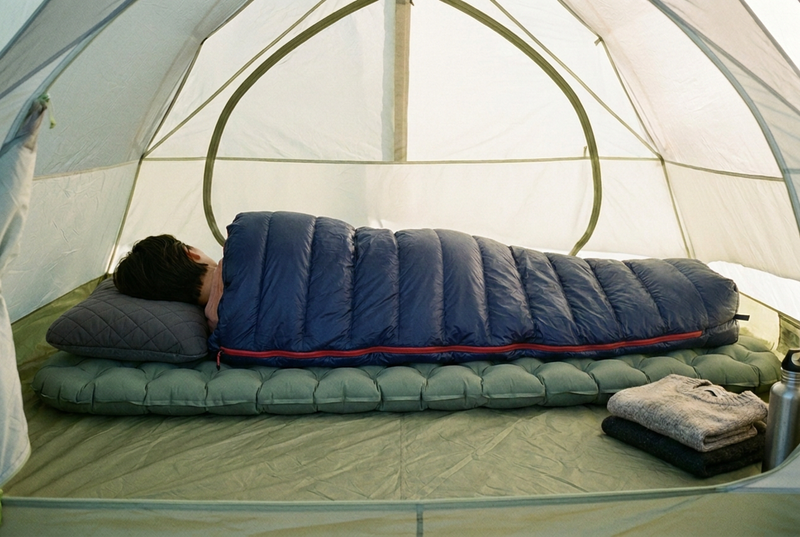
The insulation under you is squashed flat by your own weight, and flat insulation traps very little air. Therm-a-Rest puts it plainly: lie in a sleeping bag directly on the ground and you get cold quickly through conduction, because the compressed down cannot insulate. Underneath you, the pad does the work.
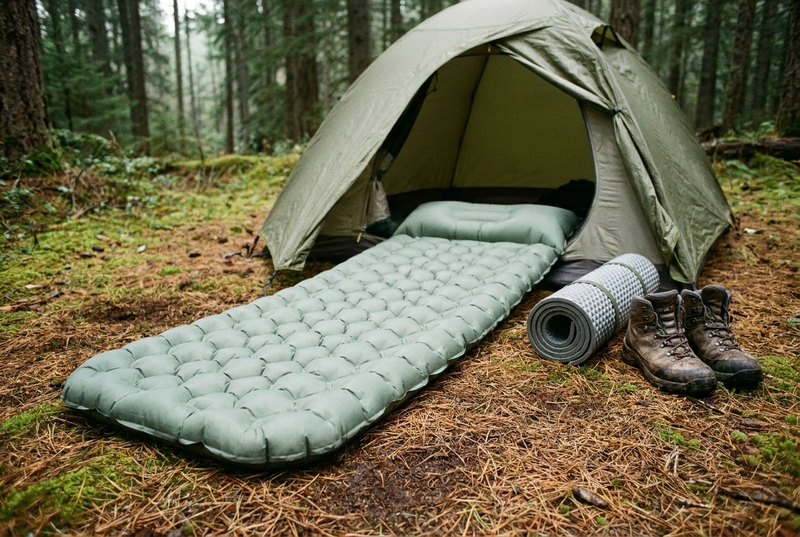
A pad's R-value measures how well it resists heat flow, and higher is warmer. REI's rough bands are under 2 for warm weather, 2 to 3.9 for cool, 4 to 5.4 for cold, and 5.5 or more for extreme cold. R-values add when you stack pads, according to both REI and Therm-a-Rest, so a closed-cell foam mat (most are around R 2) under an inflatable pad is the standard answer for frozen ground or snow.
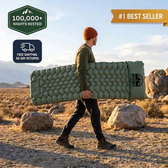
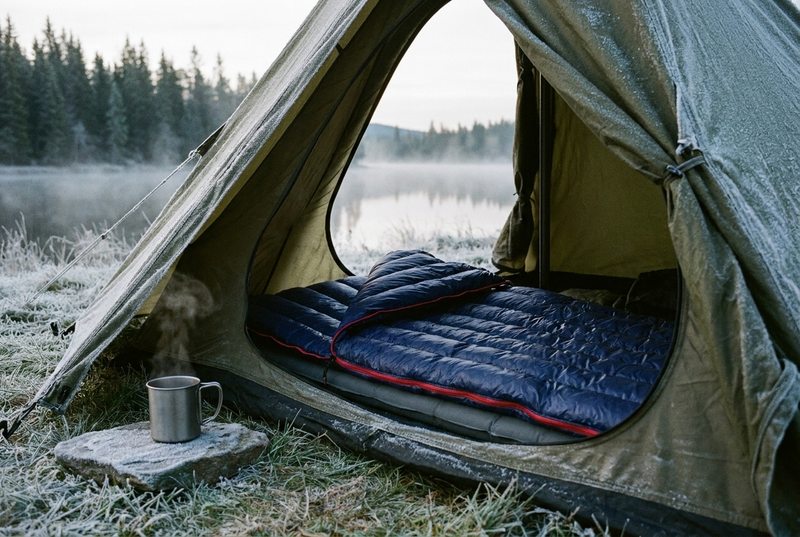
The Restwild Ultralight Mattress Pro is 4 in (10 cm) thick with a stated R-value of 4.0, the bottom of REI's cold-weather band. On frozen ground or snow, our own advice is to put a closed-cell foam mat under it. See how to choose a sleeping pad.
Which sleeping bag rating should you go by?
Go by the comfort rating, not the limit. In the ISO 23537 test, comfort is the lowest temperature at which a cold sleeper can sleep in a relaxed position. Limit is the lowest temperature at which a warm sleeper gets through the night curled up. REI adds two caveats: lab ratings assume long underwear, socks and a well-insulated pad, and a rating that does not say "comfort" or "limit" is probably the brand's own estimate. See sleeping bag temperature ratings explained.
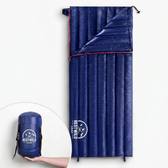
The Ultralight Goose Down Sleeping Bag lists three figures on its product page: comfort 50°F (10°C), limit 41°F (5°C) and extreme 32°F (0°C). The page does not name the standard behind them. Plan around the comfort figure: it is a bag for mild nights of about 50°F (10°C) and warmer. For colder nights, add a liner and warmer sleep layers, and do not plan a night near freezing around this bag alone.
Keep the bag dry and lofted
Down insulates only while it is fluffed up and dry. Unpack the bag when you pitch the tent, shake it out and give it time to loft. Do not tuck your face inside: Big Agnes warns against burrowing your head into the bag because the moisture in your breath soaks the insulation. Close the bag around your face and breathe outside it, and air the bag in the morning.
What should you wear to bed?
Wear a dry base layer you did not hike in, dry socks and a hat. The idea that sleeping naked is warmer is a myth: clothing is one more layer of insulation inside the bag. REI's advice is to always sleep in dry clothes, with wool or synthetic long underwear as the safe choice, because damp fabric cools you as it dries.
Do not wear so much that you sweat, and do not pack the bag so tightly that you flatten its loft. If you feel too warm, open the zipper before you start to sweat.
Head, neck and pillow
You do not lose most of your body heat through your head. The Indiana University authors of a 2008 BMJ article on medical myths traced that claim to an old military test on subjects wearing arctic suits and no hats, and put the real share at no more than about 10 percent. A hat still matters at night because your head is often the only part left outside the insulation.
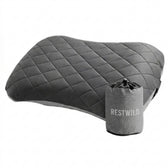
A pillow helps in two modest ways. It keeps your head off the cold tent floor, and with your head supported it is easier to keep the top of the bag snug around your neck and shoulders. The Ultralight Camping Pillow has a strap that holds it on the pad. If a hip or shoulder presses through your pad to the ground, read camping for side sleepers.
What should you eat and drink before bed?
Your metabolism is the only heater in the bag, so feed it. REI suggests a snack before bed, and a CDC report on camping safety recommends extra calories and fluids to help prevent hypothermia. Skip the nightcap. According to a CDC report on hypothermia deaths, alcohol widens the blood vessels, which feels warm for a moment while it works against the body's defense against cold.
If you need to pee in the night, go. REI says a full bladder costs heat. We found no study that measures the effect, so treat it as common advice.
Is a hot water bottle safe in a sleeping bag?
Yes, with care. Use a hard plastic bottle with a lid that seals properly, fill it with hot water rather than boiling water, and test it upside down before it goes in the bag. A leak soaks your insulation. REI advises against metal bottles because they get too hot. Slip the bottle into a sock and hold it against your belly or between your thighs.
Where should you pitch the tent?
- Above the lowest ground. At night the air near the ground cools, gets denser and sinks. The US National Weather Service calls this cold air drainage: the valley fills from the bottom with layers of cold air. Valley floors, hollows and dips are the cold spots, so pitch a little above them.
- Out of the wind. Use a natural windbreak such as a stand of healthy trees, a boulder or a rise in the ground.
- Back from the water. Shorelines and stream banks are usually the lowest ground around and the air there is damp. Sea to Summit advises camping further back from water to cut condensation.
- Look up. The US National Park Service says that if you see dead branches overhead, you should not camp under them.
Why keep the vents open when it is cold?
Because you breathe out a lot of water. Sea to Summit says we exhale upward of one liter (about a quart) of moisture while we sleep. In a closed tent that vapor condenses on the cold fabric and ends up on your bag as drips or frost. Open the vents and crack the top of the door: the air inside gets slightly cooler, but your insulation stays dry. Leave wet clothes and boots out of the sleeping area.
Cold spots and how to fix them
| Problem | Likely cause | Fix |
|---|---|---|
| Cold from below | Pad R-value too low for the ground | Add a closed-cell foam mat under the pad |
| Cold feet | Damp or tight socks | Dry, loose socks and a hot water bottle |
| Cold neck and shoulders | Bag open at the top | Hat, pillow, close the bag around your face |
| Clammy, then chilled | Too many layers, sweating | Open the zipper, take off a layer |
| Damp bag in the morning | Breath and condensation | Open vents, breathe outside the bag, air it out |
| Wake up cold at 3 a.m. | Low on fuel, full bladder | Eat a snack, pee, add a dry layer |
| Cold all night in a hollow | Pooled cold air | Move to slightly higher, sheltered ground |
Checklist for the hour before bed
- Lay out the pad and shake out the sleeping bag so it can loft.
- Eat a snack and have a warm drink without alcohol.
- Walk around or do a few squats until you are warm but not sweating.
- Change into a dry base layer, dry socks and a hat.
- Fill the hot water bottle and check the seal.
- Pee.
- Open the vents and move wet gear out of the sleeping area.
- Put a spare layer and a snack within reach. Where bears are present, keep food out of the tent and store it properly.
When is being cold dangerous?
CDC lists these warning signs of hypothermia in adults: shivering, exhaustion, confusion, fumbling hands, memory loss, slurred speech and drowsiness. Hypothermia is a medical emergency, so get medical help right away. Until help arrives, get the person into shelter, remove wet clothing, warm the chest, neck, head and groin first, and give warm drinks without alcohol if they are fully awake. A body temperature below 95°F (35°C) needs medical attention right away. If the person is unconscious or seems to have no pulse, CDC says to handle them gently, get emergency help immediately and perform CPR until help arrives. A confused person may not notice the problem, so watch each other.
Never run a stove, heater, lantern or grill inside a tent to warm up. According to a CDC report on carbon monoxide deaths among campers, fuel-burning camping equipment should never be used inside a tent or other enclosed shelter, opening the flaps does not prevent a dangerous buildup, and sleeping people cannot recognize the early symptoms.
Frequently asked questions
Is it warmer to sleep naked in a sleeping bag?
No. Dry clothing adds insulation, so a dry base layer, socks and a hat are warmer than bare skin. The exceptions are damp clothes and so many layers that you sweat or flatten the bag's loft.
Should a foam mat go under or over an inflatable pad?
Under. The R-values add either way, and REI recommends the closed-cell foam underneath because it also protects the inflatable pad from punctures and from moisture that collects on cold ground.
Why am I cold in a bag rated for the temperature?
The usual reasons are a pad with too little insulation, a limit rating read as a comfort rating, damp insulation or clothes, and going to bed cold or hungry. Fix the ground insulation first.
Can I heat a tent with a camp stove or gas heater?
No. CDC says fuel-burning stoves, heaters, lanterns and grills should never be used inside a tent, and open flaps do not stop carbon monoxide from building up. Add insulation, food and a hot water bottle instead.