Emergency bivvy: what it is, when to carry one, how to use it

An emergency bivvy is a pocket-sized, wind- and waterproof sack with a reflective lining that you climb into to slow heat loss when you are stuck outdoors, in a stalled car or in a house without power. It does not replace a sleeping bag: carry it for the night you did not plan, and use it together with ground insulation, dry layers and an early call for help.
What is an emergency bivvy?
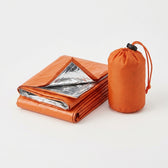
Bivvy, also spelled bivy, is short for bivouac sack. REI's guide to bivy sacks traces the idea to climbers who wanted lightweight emergency weather protection for their sleeping bags on multi-day ascents. A full bivy sack today is a fabric shell with a waterproof floor and a breathable top. An emergency bivvy is the stripped-down version: a sack typically made of thin metallized film, light and small enough to live in a pack or a glove box.
The film is the same family of material as a space blanket. NASA's account of the technology says it is made by depositing vaporized aluminum onto thin plastic. Depending on the use, the material is meant either to deflect infrared rays or to conserve them as a passive warming system. Infrared is the form in which your body radiates heat.
The shape is what sets a bivvy apart from a blanket. A flat sheet has to be held shut, while a sack stays closed around you and leaves your hands free.
How does an emergency bivvy keep you warm?
It makes no heat. It slows the loss of the heat you produce. HealthLink BC, a British Columbia government health service, describes four ways the body loses heat: radiation, conduction, convection and evaporation. A thin film sack deals with some of them well and with one hardly at all. The table is our summary of how the two fit together, not a test result.
| Heat loss route | What it means outdoors | What the bivvy does | What you still have to add |
|---|---|---|---|
| Radiation | Warm skin and clothing give off heat to colder surroundings | The reflective inside faces you and turns some of that heat back | Insulating layers, which do most of the work |
| Convection | Wind carries warm air away | The windproof film stops moving air | A spot out of the wind |
| Evaporation | Wet skin and wet clothes cool you as they dry | The waterproof film keeps rain and wet snow off | Dry layers. Your own moisture stays inside |
| Conduction | Heat flows into cold ground, rock or snow where you touch it | Very little. The film is thin | Something thick and dry under you |
HealthLink BC adds that wet clothing greatly increases heat loss and that dry, windy weather increases it too. That is why a sack that blocks wind and rain is worth carrying even without filling.
Does an emergency bivvy replace a sleeping bag?
No. A sleeping bag insulates with inches of trapped air. An emergency bivvy is a thin film with no fill. It can slow heat loss on an unplanned night. It will not make that night comfortable or guarantee your safety, and it carries no temperature rating.
The Restwild Emergency Bivvy Sack is made for emergencies and has no temperature rating. For a night you plan, take a sleeping bag chosen by its comfort rating and a pad to match: see sleeping bag temperature ratings explained and how to choose a sleeping pad.
When should you carry one?
In your day pack
The US National Park Service includes emergency shelter in its Ten Essentials, the list of items it tells park visitors to pack, and names a tent, space blanket, tarp or bivy as lightweight options. A day hiker who is slowed by an injury, a wrong turn or weather has only what is in the pack. Around the bivvy, the same list calls for extra clothing, a light, food, water, fire and first-aid supplies.
In your car
The US National Weather Service lists blankets or sleeping bags in its winter survival kit for vehicles, along with a flashlight and extra batteries, a first-aid kit, high-calorie food, extra clothing to keep dry, a shovel and a phone charger. It also advises telling someone your timetable and your primary and alternate routes. A bivvy does not replace the blankets on that list. It adds a windproof and waterproof layer that takes up almost no room.
If a winter storm traps you in a vehicle, the Weather Service's advice for that situation is to stay in the vehicle, run the motor about 10 minutes each hour for heat, open a window a little for fresh air while it runs, and clear snow from the exhaust pipe. The last two steps are there to prevent carbon monoxide poisoning. Make yourself visible to rescuers: turn on the dome light at night when the engine is running and tie a bright cloth to the antenna or door.
At home
A power cut in winter is the third case. A bivvy under your ordinary blankets adds a layer that holds warm air in a cold house. Do not bring a camp stove, grill or generator indoors for heat: they produce carbon monoxide.
For scale, the Restwild bivvy weighs 4.4 oz (125 g) with its drawstring stuff sack, which measures 2.75 x 4.25 in (7 x 11 cm). Unfolded it is 83 x 35 in (210 x 90 cm), sized for one adult, and it comes in orange or green.
How do you use an emergency bivvy?
- Stop early. Decide while your hands and your judgment still work. A bivvy holds on to the warmth you bring into it, so get in before you are deeply chilled.
- Get out of the wind. Use a boulder, a stand of trees or the lee side of the car.
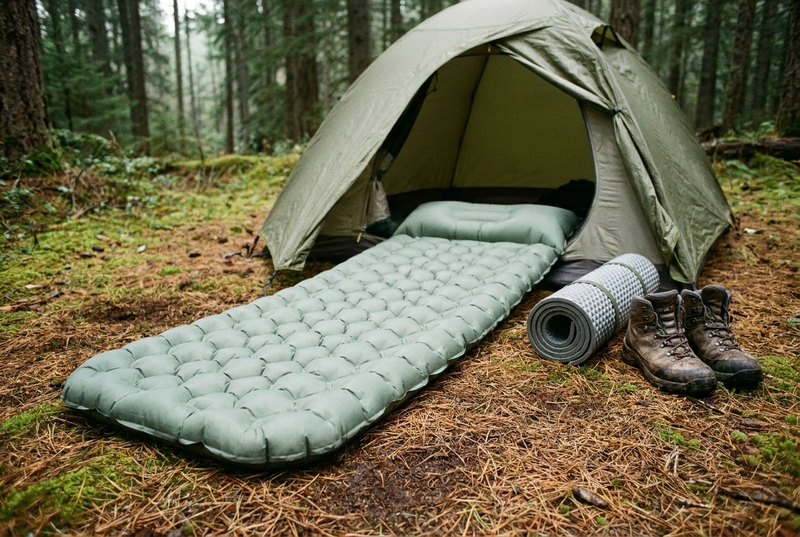
- Insulate yourself from the ground. This matters most. Sit or lie on a foam pad, your empty pack, a coiled rope, spare clothing or a car floor mat.
- Put on every dry layer you have, including a hat and gloves. If your clothes are soaked and you carry dry ones, change once you are out of the wind and rain. If you have nothing dry, keep your clothes on: do not undress in the open.
- Get in and close the opening around your shoulders. Keep your nose and mouth outside the sack, so you breathe fresh air and your breath does not condense inside.
- Add insulation over the bivvy if you have it. At home or in a car, lay blankets and spare jackets on top.
- Eat and drink. Your body can only make heat from fuel.
- Stay findable. Stay near the trail or the vehicle, keep a light and a whistle within reach, and stay put if you have already called for help.
On step three, the American Academy of Family Physicians' summary of the Wilderness Medical Society's hypothermia guidelines makes the same point: protecting the person from the ground and the elements with insulation and a vapor barrier is central to treating hypothermia at every stage. The bivvy is the barrier. The insulation has to come from what you carry and wear.
Why does the inside of a bivvy get wet?
Because the same film that keeps rain out keeps your moisture in. REI explains the mechanism for bivy sacks in general: vapor from your body and lungs meets colder air, the air can no longer carry all of it, and some collects on the inner wall. A breathable bivy lets part of that vapor through. A waterproof film does not, so expect dampness inside.
You can limit it:
- Breathe outside the sack.
- Do not get in sweaty. Slow down and cool off for the last stretch before you stop.
- Open the top for a moment now and then if you feel clammy and conditions allow.
- When you get out, put on a dry or windproof layer right away. Damp clothing loses heat faster.
When should you call for help?
Early. A bivvy buys time. It does not treat hypothermia, and hypothermia is a medical emergency. If you are lost, injured or facing a night out in cold, wet or windy weather without proper gear, call before your battery or your judgment runs low: 911 in the US and Canada, 999 or 112 in the UK, 000 in Australia.
The CDC lists these warning signs of hypothermia in adults: shivering, exhaustion or feeling very tired, confusion, fumbling hands, memory loss, slurred speech and drowsiness. Its advice is to seek medical attention as soon as possible, get the person into a warm room or shelter, then remove any wet clothing and warm the center of the body: chest, neck, head and groin. Warm drinks can help, but not alcohol, and nothing by mouth for an unconscious person. If the person is unconscious and does not seem to have a pulse or to be breathing, the CDC says to handle them gently, get emergency assistance immediately and perform CPR until the person responds or medical aid arrives.
The summary of the Wilderness Medical Society guidelines adds a way to judge severity when you have no thermometer. Mild hypothermia first affects movement. Declining alertness and the loss of shivering come next, before a person becomes unconscious. Someone who has stopped shivering but is still cold and is getting drowsy or confused is getting worse, not better. Handle them gently, keep them lying flat and insulated, give no food or drink, and get emergency help. The summary also says wet clothes should stay on until the person is in a warm environment: outdoors, put the bivvy over what they are wearing and insulate around it. For a mild case, it says to evacuate if there is no improvement in 30 minutes.
Gear mentioned: the Restwild Emergency Bivvy Sack. For planned nights, see the sleep system and our guide on how to sleep warm in a tent.
Frequently asked questions
Is an emergency bivvy better than an emergency blanket?
They use the same kind of reflective film. A bivvy is a closed sack, so it stays around you in wind without being held and leaves your hands free. A flat blanket is more flexible as a wrap for someone else, a ground sheet or a sun shade.
Can you sleep in an emergency bivvy?
You can rest and doze in one to get through an unplanned night, but it does not replace a sleeping bag. It has no fill and no temperature rating, and condensation builds up inside. For any night you plan, take a sleeping bag and a pad.
Do you need a sleeping pad with an emergency bivvy?
Yes, or anything that does the same job. The film is too thin to stop heat flowing into the ground. Sit or lie on a foam pad, a pack or spare clothing.
Is it spelled bivvy or bivy?
Both are in use, and both are short for bivouac sack. Bivy is the usual spelling in the United States, and bivvy is common in the United Kingdom and Australia.